The early years of a child’s life are the most important for cognitive, social, and emotional development. During this stage, children begin building the foundation for how they learn, interact with others, and understand the world around them.
One of the most recognized early education systems worldwide is EYFS, a framework designed to support children from birth to five years old.
The EYFS approach focuses on learning through play, exploration, and meaningful interactions. Rather than emphasizing traditional academic pressure, it encourages curiosity, creativity, and confidence.
This balanced approach allows children to develop the essential skills they need before entering primary school.
For parents in Dubai and across the UAE, understanding the value of EYFS can help them choose an educational environment that nurtures their child’s potential.
Research such as the SIG Parent Insight Study, which explored what Dubai families value most in a school, and educational models like High Performance Learning add useful context to that decision.
Understanding the EYFS Framework
The EYFS framework, also known as the Early Years Foundation Stage, is the statutory framework used in England for children from birth to five, and it is followed by British curriculum schools and nurseries around the world.
It provides guidelines for how young children learn and develop, ensuring that schools and nurseries create environments where children feel safe, supported, and inspired to explore. In the UAE, EYFS is the first stage of the British curriculum, followed by Key Stage 1 from Year 1.
What Makes EYFS Unique
Unlike traditional academic systems that focus mainly on memorization and structured lessons, EYFS emphasizes learning through experiences.
Children are encouraged to ask questions, experiment with ideas, and discover new concepts through activities and play.
This approach helps children develop essential skills such as communication, creativity, and problem solving.
Core Principles of EYFS
The EYFS framework is built on four fundamental principles:
- A Unique Child: Every child develops at their own pace and should be supported accordingly.
- Positive Relationships: Strong connections with teachers and peers help children feel secure and confident.
- Enabling Environments: Learning spaces are designed to encourage exploration and creativity.
- Learning and Development: Children develop and learn at different rates, and they grow best when education addresses all areas of development, including social, emotional, and physical growth.
These principles create a nurturing environment where children can develop both academically and personally.
The Seven Areas of Learning in EYFS
EYFS organizes learning into seven areas. The three prime areas build the foundation for everything that follows:
- Communication and Language
- Personal, Social and Emotional Development
- Physical Development
The four specific areas strengthen and apply those foundations:
- Literacy
- Mathematics
- Understanding the World
- Expressive Arts and Design
At the end of the stage, teachers assess each child against the Early Learning Goals, which give parents and the next teacher a clear picture of the child’s readiness for Year 1.
EYFS in Dubai and the UAE
In British curriculum schools across Dubai and the wider UAE, EYFS usually covers two school years: Foundation Stage 1 (FS1), which typically starts at age three, and Foundation Stage 2 (FS2), which typically starts at age four.
Children then move into Year 1 of primary school.
Many nurseries also follow EYFS for younger children, which makes the move into FS1 feel familiar. In Sharjah, Early Explorers Nursery, the flagship nursery of Scholars International Group in Al Zahia, follows the British EYFS framework and welcomes children from two to four years old.
The Role of Play in EYFS Learning
Play is a central part of the EYFS philosophy. Through play based learning, children gain knowledge and skills naturally while enjoying the learning process.
How Play Supports Learning
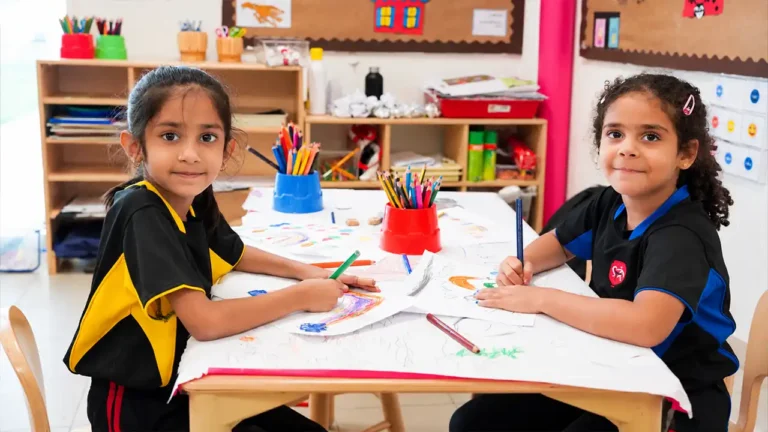
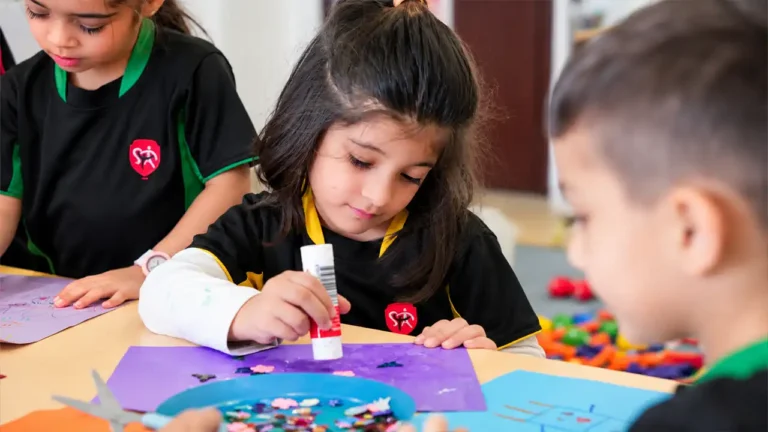
Activities such as storytelling, role play, building blocks, and art projects allow children to explore new ideas and develop their imagination. These experiences also strengthen communication skills and encourage teamwork.
Play based learning is particularly effective because it keeps children engaged while helping them understand concepts in a practical way. EYFS describes this through three characteristics of effective learning: playing and exploring, active learning, and creating and thinking critically.
Encouraging Creativity and Curiosity
Creativity is an essential element of EYFS education. Teachers encourage children to express themselves through art, music, storytelling, and movement.
These creative activities help children build confidence and develop the ability to think independently.
Research Insights from SIG Parent Insight Study
Parental perspectives play an important role in evaluating educational approaches. The SIG Parent Insight Study 2026, based on responses from 400 parents in Dubai, explored what families look for when choosing a school.
What Parents Value When Choosing a School
According to the SIG Parent Insight Study, parents build trust through transparency, teaching quality and safeguarding, and they judge value by academic progress, visible teaching and stable leadership rather than by facilities alone.
The study also found that 88% of parents worry technology is starting to crowd out human led teaching and pastoral care.
The EYFS approach aligns closely with these expectations. It is built on warm relationships, attentive adults, and learning through real experiences, with screens playing only a small part. Three quarters of parents in the study also linked British curriculum schools with a reassuring, structured approach.
How EYFS Meets Parental Expectations
Transparency was one of the main trust drivers parents named in the SIG Parent Insight Study.
Within the EYFS framework, schools often maintain strong partnerships with parents through regular progress updates, meetings, and collaborative learning activities. Coming prepared with a few parent teacher meeting tips helps families get the most from these conversations.
High Performance Learning and Early Education
Modern schools increasingly integrate advanced educational models such as High Performance Learning to complement early learning frameworks.
What Is High Performance Learning
High Performance Learning is an educational philosophy that encourages students to develop advanced thinking skills, resilience, and academic confidence. It focuses on helping learners reach their full potential through structured guidance and supportive learning environments. You can read more about High Performance Learning in UAE schools.
How EYFS Supports High Performance Learning
The principles of High Performance Learning align well with the goals of EYFS education. Both approaches emphasize critical thinking, curiosity, and personal growth.
By introducing these concepts early, schools help children develop learning habits that support long term academic success.
Children who begin their education within the EYFS framework often demonstrate strong communication skills, creativity, and confidence as they progress through higher levels of education.
Holistic Development in EYFS
One of the greatest strengths of EYFS is its focus on holistic child development. Instead of concentrating only on academic performance, the framework supports every aspect of a child’s growth.
Social and Emotional Development
Within EYFS classrooms, children learn how to interact with others, share ideas, and resolve conflicts. These experiences help them develop emotional intelligence and empathy.
Physical Development
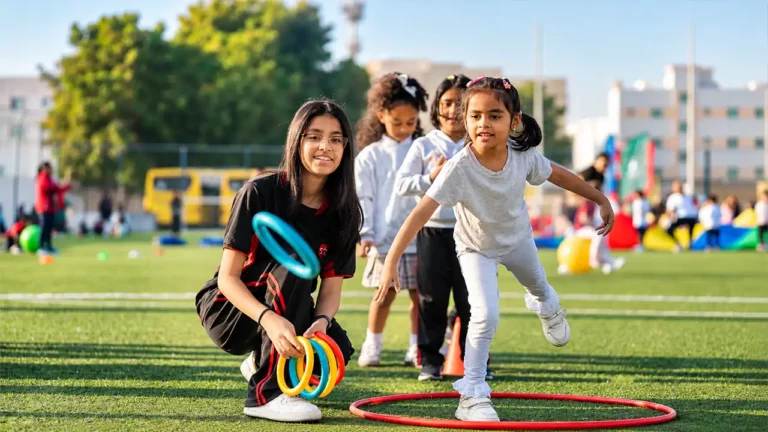
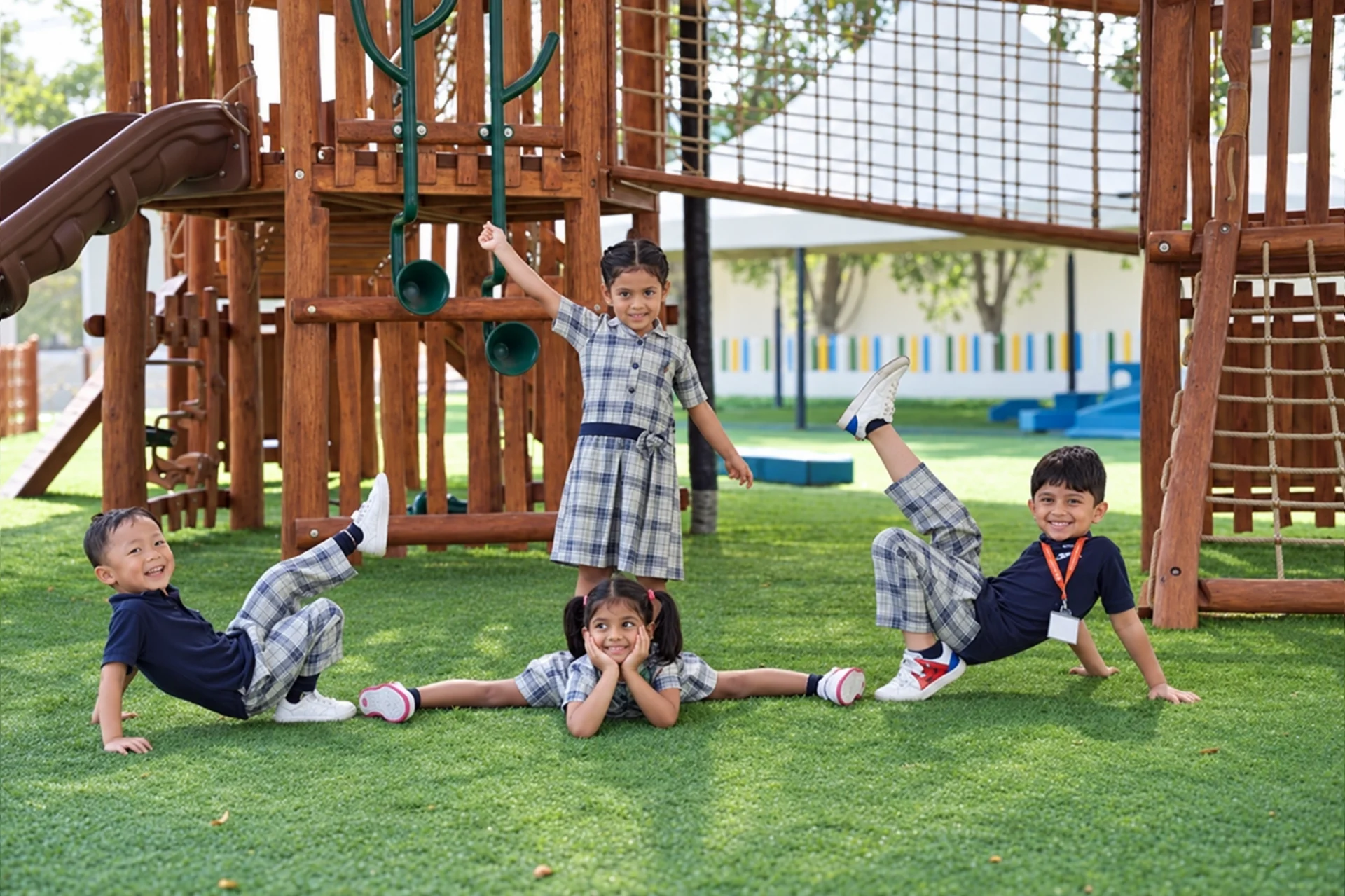
Activities such as outdoor play, sports, and movement based learning help children improve coordination and physical health. Plenty of active play at home also helps keep screen time for children in healthy balance.
Language and Communication Skills
Communication is a key focus in EYFS education. Teachers encourage children to express their thoughts, ask questions, and engage in conversations.
These skills are essential for future academic success and personal development. Sharing books every day is one of the simplest ways to support them, and these ideas on how to encourage children to read can help at home.
Preparing Children for Future Education
The transition from early childhood education to primary school can be challenging for young learners. However, the EYFS framework helps ensure a smooth transition.
Building Academic Readiness
By introducing basic literacy, numeracy, and problem solving activities, EYFS prepares children for the more structured learning of Year 1, whether they continue in the same school or move to one of the best primary schools in Dubai.
Developing Confidence and Independence
Children in EYFS programs are encouraged to make decisions, explore their interests, and solve problems independently.
These experiences help them develop self-confidence and resilience—qualities that are essential for success in school and beyond.
Giving Your Child the Strongest Start in Education
Choosing the right early education system is one of the most important decisions parents make for their children. The EYFS framework offers a balanced approach that combines play, exploration, and structured learning to support every aspect of a child’s development.
Aligned with what Dubai families shared in the SIG Parent Insight Study about trust, teaching quality and human connection, and complemented by advanced educational models like High Performance Learning, EYFS provides children with the tools they need to thrive academically and socially.
By nurturing curiosity, creativity, and confidence from an early age, EYFS helps children build a strong foundation for lifelong learning.
If you are exploring early education options for your child, you can Apply Online and our team will guide you through the next steps toward the best possible beginning.
FAQ
What is EYFS in education?
EYFS stands for Early Years Foundation Stage, a framework that supports the learning and development of children from birth to five years old. It focuses on play based learning, creativity, and holistic development.
Why choose EYFS for your child in Dubai?
Many schools in Dubai follow the EYFS framework because it is internationally recognized and promotes balanced child development. It encourages creativity, communication, and confidence while preparing children for future education.
How does EYFS differ from other early years programs?
Unlike traditional early education systems that focus heavily on structured lessons, EYFS emphasizes play based learning, individualized support, and holistic development.
This approach allows children to explore ideas naturally while building important life skills.