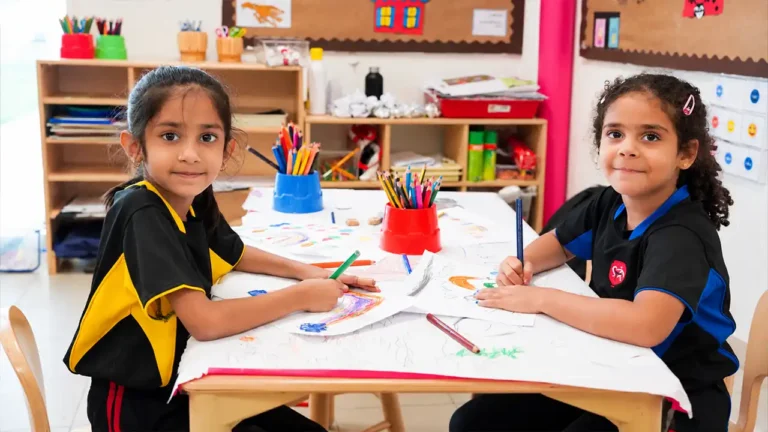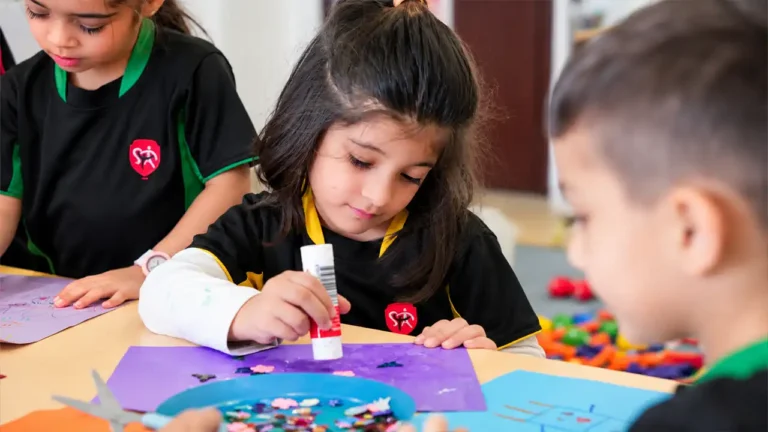
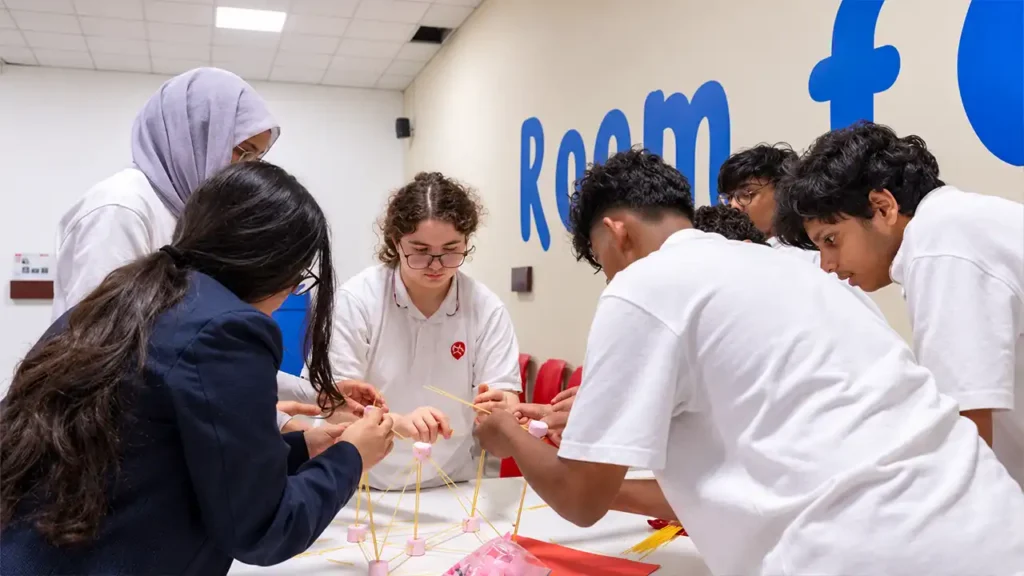
STEM education brings science, technology, engineering and mathematics together into a single, hands on way of learning.
Rather than teaching these subjects in isolation, it asks students to apply them the way professionals actually do, through real problems, real data and real experiments.
Across the UAE, this approach has moved from a classroom buzzword to a genuine priority for parents, schools and policy makers alike.
What Does Science Technology Engineering Mathematics Actually Look Like in the Classroom?
Science technology engineering mathematics sounds abstract until it is broken down into daily classroom practice. A science lesson might involve testing a hypothesis rather than reading about one.
A maths lesson might involve calculating the load a bridge model can hold before it bends. A technology lesson might mean building a simple app instead of simply learning how software works in theory.
Even engineering, often the least familiar of the four letters to parents, shows up in something as simple as designing a stronger paper bridge or a more efficient water filter.
This applied approach is what separates STEM education from traditional, subject by subject teaching.
Building a Strong STEM Curriculum From an Early Age
A well designed STEM curriculum starts long before secondary school. Early exposure to logical thinking, pattern recognition and simple experiments builds the confidence students need to tackle more complex STEM concepts later on.
These experiences contribute to wider student development, helping students become confident problem solvers and independent learners.
Schools that introduce STEM concepts in the primary years tend to see stronger engagement once subjects become more technical, since students arrive at secondary level already comfortable asking questions rather than waiting to be given answers.
Why STEM Education UAE Is Becoming a National Priority
STEM education UAE has grown in importance alongside the country’s wider push toward innovation, space exploration and advanced technology sectors.
As the economy diversifies away from traditional industries, demand for graduates with strong analytical and technical skills continues to rise.
STEM Programs Dubai Families Are Asking About
STEM programs Dubai parents increasingly ask about tend to focus on practical outcomes rather than theory alone, things like coding clubs, science fairs and applied maths projects.
Families exploring these approaches often compare different options, including Best British Schools in UAE, to understand how schools integrate modern skills into their curriculum.
At SIA, STEAM sits at the center of the curriculum, and results in subjects like chemistry and mathematics have ranked among the highest in the region, giving families a concrete example of what a STEM focused education can produce.
Coding for Students: The New Foundation Skill
Coding for students is increasingly treated as a foundational skill rather than an optional extra, similar to how reading and arithmetic were once treated.
Learning to code builds logical sequencing, problem decomposition and patience with trial and error, all of which transfer directly into this kind of learning more broadly.
Even students who never pursue programming as a career benefit from the discipline of breaking a large problem into smaller, testable steps.
Robotics Education and Hands On Learning
Robotics education takes coding a step further by connecting it to a physical outcome. When a robot moves, turns or completes a task because of code a student wrote, the abstract becomes tangible.
This kind of hands on learning is often what turns a hesitant student into an engaged one, since progress is visible immediately rather than graded days later.
STEM Education in Dubai and Sharjah Schools
STEM education in Dubai and Sharjah schools is moving away from treating science, technology, engineering and maths as separate periods. As part of a wider shift towards innovation in education, many schools now build cross subject projects that mirror how real engineering and research teams work.
In Sharjah as well as Dubai, families will find STEM taught through science labs, coding, robotics clubs and design challenges built into the normal timetable, not only as after school extras.
This approach also requires strong communication between teachers and families. Regular discussions through resources such as parent teacher meeting tips can help parents understand how their child is progressing with new learning approaches.
What Makes the Best STEM Schools in Dubai Stand Out
The best STEM schools in Dubai tend to share a few common traits: dedicated project time, teachers confident enough to let students fail safely, a curriculum that connects classroom learning to real world applications students can recognise from daily life, and regular opportunities to showcase work beyond the classroom itself.
STEM Activities for Students Beyond the Classroom
STEM activities for students do not have to stop when the school day ends. Science fairs, robotics competitions, coding clubs and maker spaces all extend this kind of learning into time that would otherwise be unstructured, and they tend to be where the most reluctant students often become the most enthusiastic.
Working in teams toward a shared deadline also teaches collaboration in a way that individual classroom assignments rarely manage to.
Newer additions to the education landscape, such as Scholars School, are being designed with these modern skills built into the foundation from day one rather than added on afterward, reflecting how much this field has shifted from optional enrichment to a core expectation.
Future Skills and Career Opportunities
Future skills built through STEM education extend well beyond any single career path. Analytical thinking, comfort with ambiguity and the ability to work through a problem systematically are valued across medicine, finance, design and law, not just traditional engineering roles.
These skills are strengthened when students build strong learning habits from an early age, including the ability to research, understand information and encourage children to read beyond the classroom.
Employers across nearly every sector now list these habits among their top hiring priorities, regardless of the specific job title.
Where STEM Education Leads After Graduation
Graduates with a strong STEM education background are well positioned for careers in fields the UAE has explicitly prioritised, including aerospace, renewable energy, artificial intelligence, space technology and advanced manufacturing. Even students who do not pursue a STEM career directly tend to carry these problem solving habits into whatever field they choose.
Parents comparing schools across the UAE at this stage often use a resource like Top Private Schools UAE to understand how different campuses structure their approach to STEM before making a decision.
Frequently Asked Questions
What is STEM education?
STEM education is an approach to teaching science, technology, engineering and mathematics as connected, applied subjects rather than isolated ones. It focuses on real problem solving, experimentation and project based learning rather than memorisation alone, and it typically starts building these habits well before secondary school.
Do Dubai schools teach STEM?
Yes. Many schools across Dubai and the wider UAE have built STEM into their curriculum, ranging from dedicated STEAM programmes to coding clubs, robotics teams and applied science projects that run alongside core subjects.
Why is STEM important for students?
STEM builds analytical thinking, problem solving and adaptability, skills that matter well beyond any single career. As industries continue to shift toward technology and innovation, students with a strong STEM foundation tend to have more options, not fewer, when it comes time to choose a career path.